Taiwanese kana
Taiwanese kana (タイ ヲァヌギイ
ヲァヌギイ カアビェン) is a katakana-based writing system that was used to write Taiwanese Hokkien (commonly called "Taiwanese") when the island of Taiwan was under Japanese rule. It functioned as a phonetic guide to hanzi, much like furigana in Japanese or Zhuyin fuhao in Chinese. There were similar systems for other languages in Taiwan as well, including Hakka and Formosan languages.
| Taiwanese kana | |
|---|---|
| Type | Syllabary with some features of an alphabet
|
| Languages | Taiwanese Hokkien |
Time period | 1896–1945 |
Parent systems | |
Sister systems | Hakka kana |
| Taiwanese kana | |||||||||||||||
|---|---|---|---|---|---|---|---|---|---|---|---|---|---|---|---|
| Chinese name | |||||||||||||||
| Traditional Chinese | 臺灣語假名 | ||||||||||||||
| Simplified Chinese | 台湾语假名 | ||||||||||||||
| |||||||||||||||
| Japanese name | |||||||||||||||
| Kyūjitai | 臺灣語假名 | ||||||||||||||
| Shinjitai | 台湾語仮名 | ||||||||||||||
| |||||||||||||||
| Chinese romanisation |
|---|
| Mandarin |
| Wu |
| Yue |
| Min |
| Gan |
| Hakka |
| Xiang |
| See also |
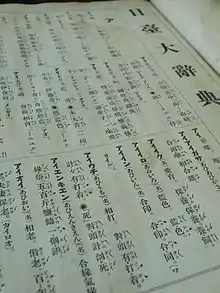
The system was imposed by Japan at the time and used in a few dictionaries, as well as textbooks. The Taiwanese-Japanese Dictionary, published in 1931–32, is an example.[1] It uses various signs and diacritics to identify sounds that do not exist in Japanese. The system is chiefly based on the Amoy dialect of Hokkien.
Through the system, the Office of the Governor-General of Taiwan aimed to help Taiwanese people learn the Japanese language, as well as help Japanese people learn the Taiwanese language. Linguistically speaking, however, the syllabary system was cumbersome for a language that has phonology far more complicated than Japanese. After Japanese administration ended, the system soon became obsolete. Now, only a few scholars, such as those who study the aforementioned dictionary, learn Taiwanese kana.
The system has undergone some modification over time. This article is mainly about the last edition, used from roughly 1931.
Basic rules
Mapped sounds are mostly similar to katakana in Japanese, with the kana ヤ, ユ, ヨ, ワ, ヰ, and ヱ not used. Each syllable is written with two or three kana (with a few exceptions). Notable differences include:
Vowels
- There are six vowels in Taiwanese: ア [a], イ [i], ウ [u], エ [e], オ [ɔ], ヲ [ə]. Note that the pronunciations of オ and ヲ are different from Japanese.
- The vowel ヲ is pronounced [u] in the diphthongs ヲア [ua] and ヲエ [ue], also their extensions such as ヲァイ [uai], ヲァッ [uat̚]. In some dialects ヲ may be pronounced [o] or [ɤ].
- In syllables with a single vowel, the kana for the vowel is repeated, like the long vowels in Japanese. For example, カア [ka], キイ [ki], オオ [ɔ], ヲヲ [ə].
- The small kana ァ, ィ, ゥ, ェ, ォ, 𛅦 are defined as short vowels. They are used to represent the second vowel in the middle of a syllable, or a final glottal stop. For example, キァウ [kiau], キェク for [kiek̚], キァゥ [kiauʔ].
- There are two optional vowel kana for Choâⁿ-chiu accent (Quanzhou dialect): ウ [ɨ] and オ [ə]. For example, クウ [kɨ], コオ [kə], クゥヌ [kɨn].
Consonants
- フ is pronounced [hu], not [ɸɯ] as in Japanese.
- There are five overlined kana to distinguish [t] and [ts]/[tɕ]. サ [tsa], チ [ti], ツ [tu], セ [tse], ソ [tsə] or [tso].
Taiwanese kana Modern Japanese kana a i u e ɔ/ə a i u e o t タ チ ツ テ ト タ ティ トゥ テ ト ts/tɕ サ チ ツ セ ソ ツァ チ ツ ツェ ツォ
- The aspirated consonants [pʰ], [tʰ], [kʰ], [tsʰ]/[tɕʰ] are represented by adding an underdot to the kana. For example, ク̣ for [kʰu].
- Final nasal consonants are written as ム [m], ヌ [n], ン [ŋ]. Note that ム, ヌ are pronounced [mu], [nu] when they are used as initials. For example, カヌ [kan], ヌヌ for [nun].
- The syllabic consonant [ŋ̍] is spelt (u+)ン, for example クン [kŋ̍]. Note that [ŋ̍] without a preceding vowel is written as a single ン, not ウン or ンン.
- The syllabic consonant [m̩] is spelt (u+)ム, for example フム [hm̩]. Note that [m̩] without a preceding vowel is written as a single ム, not ウム or ムム.
- Initial [ŋ] is spelt as [ɡ] with a nasal tone sign. For example, ガア [ɡa˥˩], ガア
 [ŋa˥˩].
 - Final plosives (which have no audible release) are プ [p̚], ッ [t̚], ク [k̚], similar to the kana used in Ainu.
- Final glottal stops [ʔ] are represented by the short-vowel small kana (ァ, ィ, ゥ, ェ, ォ, ヲ) at the end. For example, カァ [kaʔ], カゥ [kauʔ].
Tone signs
There are different tone signs for normal vowels and nasal vowels.
Tone number 1 2(6) 3 4 5 7 8 Pitch ˦ ˥˩ ˧˩ ˧ ˨˦ ˧ ˥ Normal vowels None 


Nasal vowels 


POJ a á à ah â ā a̍h
- When a text is written vertically, these signs are written on the right side of letters. Taiwanese kana is only attested in vertical orientation, so it is unknown where the signs would be placed if it were written horizontally.
- Initial consonants [m], [n], [ŋ] are always written with nasal vowel tone signs, whereas [b], [l], [ɡ] are always with normal vowels. Note that [ŋ] and [ɡ] share the same initial kana.
Taiwanese kana chart
Rime chart
|
| ||||||||||||||||||||||||||||||||||||||||||||||||||||||||||||||||||||||||||||||||||||||||||||||||||||||||||||||||||||||||||||||||||||||||||||||||||||||||||||||||||||||||||||||||||||||||||||||||||||||||||||||||||||
Syllable chart
| None | p | pʰ | b | m | t | tʰ | l | n | ts/tɕ | tsʰ/tɕʰ | s/ɕ | dz/dʑ | k | kʰ | ɡ/ŋ | h | |
| a | アア | パア | パ̣ア | バア | マア | タア | タ̣ア | ラア | ナア | サア | サ̣ア | サア | カア | カ̣ア | ガア | ハア | |
| aʔ | アァ | パァ | パ̣ァ | バァ | タァ | タ̣ァ | ラァ | ナァ | サァ | サ̣ァ | サァ | カァ | カ̣ァ | ハァ | |||
| ai | アイ | パイ | パ̣イ | バイ | マイ | タイ | タ̣イ | ライ | ナイ | サイ | サ̣イ | サイ | カイ | カ̣イ | ガイ | ハイ | |
| au | アウ | パウ | パ̣ウ | バウ | マウ | タウ | タ̣ウ | ラウ | ナウ | サウ | サ̣ウ | サウ | カウ | カ̣ウ | ガウ | ハウ | |
| auʔ | パ̣ゥ | マゥ | タゥ | ラゥ | ナゥ | サ̣ゥ | カゥ | ||||||||||
| am | アム | タム | タ̣ム | ラム | サム | サ̣ム | サム | カム | カ̣ム | ガム | ハム | ||||||
| an | アヌ | パヌ | パ̣ヌ | バヌ | タヌ | タ̣ヌ | ラヌ | サヌ | サ̣ヌ | サヌ | カヌ | カ̣ヌ | ガヌ | ハヌ | |||
| aŋ | アン | パン | パ̣ン | バン | タン | タ̣ン | ラン | サン | サ̣ン | サン | カン | カ̣ン | ガン | ハン | |||
| ap̚ | アプ | タプ | タ̣プ | ラプ | サプ | サ̣プ | サプ | カプ | カ̣プ | ハプ | |||||||
| at̚ | アッ | パッ | バッ | タッ | タ̣ッ | ラッ | サッ | サ̣ッ | サッ | カッ | カ̣ッ | ハッ | |||||
| ak̚ | アク | パク | パ̣ク | バク | タク | タ̣ク | ラク | サク | サ̣ク | サク | カク | カ̣ク | ガク | ハク | |||
| ia | イア | ピア | ミア | チア | チ̣ア | ニア | チア | チ̣ア | シア | ジア | キア | キ̣ア | ガア | ヒア | |||
| iaʔ | イァ | ピァ | ピ̣ァ | チァ | チ̣ァ | リァ | チァ | チ̣ァ | シァ | キァ | キ̣ァ | ガァ | ヒァ | ||||
| iau | イァウ | ピァウ | ピ̣ァウ | ビァウ | ミァウ | チァウ | チ̣ァウ | リァウ | ニァウ | チァウ | チ̣ァウ | シァウ | ジァウ | キァウ | キ̣ァウ | ギァウ | ヒァウ |
| iauʔ | カ̣ァゥ | ガァゥ | ハァゥ | ||||||||||||||
| iam | イァム | チァム | チ̣ァム | リァム | チァム | チ̣ァム | シァム | ジァム | キァム | キ̣ァム | ギァム | ヒァム | |||||
| iaŋ | イァン | ピァン | ピ̣ァン | リァン | チァン | チ̣ァン | シァン | ジァン | キ̣ァン | ギァン | ヒァン | ||||||
| iap̚ | イァプ | チァプ | チ̣ァプ | リァプ | チァプ | チ̣ァプ | シァプ | ジァプ | キァプ | キ̣ァプ | ギァプ | ヒァプ | |||||
| iak̚ | ピァク | ピ̣ァク | チァク | チ̣ァク | シァク | キ̣ァク | |||||||||||
| i | イイ | ピイ | ピ̣イ | ビイ | ミイ | チイ | チ̣イ | リイ | ニイ | チイ | チ̣イ | シイ | ジイ | キイ | キ̣イ | ギイ | ヒイ |
| iʔ | ピィ | ピ̣ィ | ビィ | ミィ | チィ | チ̣ィ | ニィ | チィ | チ̣ィ | シィ | キィ | ||||||
| im | イム | チム | チ̣ム | リム | チム | チ̣ム | シム | ジム | キム | キ̣ム | ギム | ヒム | |||||
| in | イヌ | ピヌ | ピ̣ヌ | ビヌ | チヌ | チ̣ヌ | リヌ | チヌ | チ̣ヌ | シヌ | ジヌ | キヌ | キ̣ヌ | ギヌ | ヒヌ | ||
| ip̚ | イプ | リプ | チプ | チ̣プ | シプ | ジプ | キプ | キ̣プ | ヒプ | ||||||||
| it̚ | イッ | ピッ | ピ̣ッ | ビッ | チッ | チッ | チ̣ッ | シッ | ジッ | キッ | キ̣ッ | ヒッ | |||||
| iu | イウ | ピウ | ビウ | チウ | チ̣ウ | リウ | ニウ | チウ | チ̣ウ | シウ | ジウ | キウ | キ̣ウ | ギウ | ヒウ | ||
| iuʔ | イゥ | ヒゥ | |||||||||||||||
| ien | イェヌ | ピェヌ | ピ̣ェヌ | ビェヌ | チェヌ | チ̣ェヌ | リェヌ | チェヌ | チ̣ェヌ | シェヌ | ジェヌ | キェヌ | キ̣ェヌ | ギェヌ | ヒェヌ | ||
| ieŋ | イェン | ピェン | ピ̣ェン | ビェン | チェン | チ̣ェン | リェン | チェン | チ̣ェン | シェン | キェン | キ̣ェン | ギェン | ヒェン | |||
| iet̚ | イェッ | ピェッ | ピ̣ェッ | ビェッ | チェッ | チ̣ェッ | リェッ | チェッ | チ̣ェッ | シェッ | ジェッ | キェッ | キ̣ェッ | ギェッ | ヒェッ | ||
| iek̚ | イェク | ピェク | ピ̣ェク | ビェク | チェク | チ̣ェク | リェク | チェク | チ̣ェク | シェク | キェク | ギェク | ヒェク | ||||
| iɔŋ | イォン | チォン | チ̣ォン | リォン | チォン | チ̣ォン | シォン | ジォン | キォン | キ̣ォン | ギォン | ヒォン | |||||
| iɔk̚ | イォク | チォク | チ̣ォク | リォク | チォク | チ̣ォク | シォク | ジォク | キォク | キ̣ォク | ギォク | ヒォク | |||||
| iə | イヲ | ピヲ | ピ̣ヲ | ビヲ | チヲ | チ̣ヲ | リヲ | チヲ | チ̣ヲ | シヲ | ジヲ | キヲ | キ̣ヲ | ギヲ | ヒヲ | ||
| iəʔ | イヲ | チヲ | リヲ | チヲ | チ̣ヲ | シヲ | キヲ | キ̣ヲ | ギヲ | ヒヲ | |||||||
| ui | ウイ | プイ | プ̣イ | ブイ | ムイ | ツイ | ツ̣イ | ルイ | ツイ | ツ̣イ | スイ | クイ | ク̣イ | グイ | フイ | ||
| u | ウウ | プウ | プ̣ウ | ブウ | ツウ | ツ̣ウ | ルウ | ツウ | ツ̣ウ | スウ | ズウ | クウ | ク̣ウ | グウ | フウ | ||
| uʔ | ウゥ | プゥ | プ̣ゥ | ツゥ | ツ̣ゥ | ツゥ | ツ̣ゥ | ク̣ゥ | |||||||||
| un | ウヌ | プヌ | プ̣ヌ | ブヌ | ツヌ | ツ̣ヌ | ルヌ | ツヌ | ツ̣ヌ | スヌ | ズヌ | クヌ | ク̣ヌ | グヌ | フヌ | ||
| ut̚ | ウッ | プッ | プ̣ッ | ブッ | ツッ | ツ̣ッ | ルッ | ツッ | ツ̣ッ | スッ | クッ | ク̣ッ | フッ | ||||
| m̩ | ム | フム | |||||||||||||||
| m̩ʔ | フム | ||||||||||||||||
| ŋ̍ | ン | プン | ムン | ツン | ツ̣ン | ヌン | ツン | ツ̣ン | スン | クン | ク̣ン | フン | |||||
| ŋ̍ʔ | プ̣ン | ツ̣ン | スン | フン | |||||||||||||
| e | エエ | ペエ | ペ̣エ | ベエ | メエ | テエ | テ̣エ | レエ | ネエ | セエ | セ̣エ | セエ | ケエ | ケ̣エ | ゲエ | ヘエ | |
| eʔ | エェ | ペェ | ベェ | メェ | テェ | テ̣ェ | レェ | ネェ | セェ | セ̣ェ | セェ | ケェ | ケ̣ェ | ゲェ | ヘェ | ||
| ɔ | オオ | ポオ | ポ̣オ | ボオ | モオ | トオ | ト̣オ | ロオ | ノオ | ソオ | ソ̣オ | ソオ | コオ | コ̣オ | ゴオ | ホオ | |
| ɔʔ | モォ | ||||||||||||||||
| ɔm | オム | トム | ソム | ||||||||||||||
| ɔŋ | オン | ポン | ポ̣ン | ボン | トン | ト̣ン | ロン | ソン | ソ̣ン | ソン | コン | コ̣ン | ゴン | ホン | |||
| ɔk̚ | オク | ポク | ポ̣ク | ボク | トク | ト̣ク | ロク | ソク | ソ̣ク | ソク | コク | コ̣ク | ゴク | ホク | |||
| ua | ヲア | ポア | ポ̣ア | ボア | モア | トア | ト̣ア | ロア | ノア | ソア | ソ̣ア | ソア | コア | コ̣ア | ゴア | ホア | |
| uaʔ | ヲァ | ポァ | ポ̣ァ | ボァ | ト̣ァ | ロァ | ソァ | ソ̣ァ | ソァ | ゾァ | コァ | コ̣ァ | ホァ | ||||
| uai | ヲァイ | ソァイ | ソァイ | コァイ | コ̣ァイ | ホァイ | |||||||||||
| uan | ヲァヌ | ポァヌ | ポ̣ァヌ | ボァヌ | トァヌ | ト̣ァヌ | ロァヌ | ソァヌ | ソ̣ァヌ | ソァヌ | コァヌ | コ̣ァヌ | ゴァヌ | ホァヌ | |||
| uaŋ | ヲァン | ソ̣ァン | |||||||||||||||
| uat̚ | ヲァッ | ポァッ | ポ̣ァッ | ボァッ | トァッ | ト̣ァッ | ロァッ | ソァッ | ソァッ | コァッ | コ̣ァッ | ゴァッ | ホァッ | ||||
| ue | ヲエ | ポエ | ポ̣エ | ボエ | トエ | ロエ | ソエ | ソ̣エ | ソエ | ゾエ | コエ | コ̣エ | ゴエ | ホエ | |||
| ueʔ | ヲェ | ポェ | ポ̣ェ | ボェ | ソェ | コェ | コ̣ェ | ゴェ | ホェ | ||||||||
| ə | ヲヲ | ポヲ | ポ̣ヲ | ボヲ | トヲ | ト̣ヲ | ロヲ | ソヲ | ソ̣ヲ | ソヲ | コヲ | コ̣ヲ | ゴヲ | ホヲ | |||
| əʔ | ヲヲ | ポヲ | ポ̣ヲ | トヲ | ト̣ヲ | ロヲ | ソヲ | ソ̣ヲ | ソヲ | コヲ | ホヲ |
- Tone signs are always needed for a syllable.
- [ɡ] always takes normal vowel tone signs; [m], [n], [ŋ] always take nasal vowel tone signs.
- Some spellings are not clear. 仔(á) was sometimes written as ア rather than アア. 的(ê) was sometimes written as エ rather than エエ.
- [ɔ] is spelt with オ, such as in オオ, ポオ, イオ, ピオ, and so on.
Example
| Audio File: | |
| Taiwanese kana: | シェヌ シイ コン、ハク シェン チァム チァム チ̣ア。 |
| IPA: | [ ɕjæn˧ ɕĩ˥ kɔŋ˥˩ hak̚˧ ɕjəŋ˥ tjam˧ tjam˧ tʰjã˥ ] |
| Pe̍h-ōe-jī: | Sian-siⁿ kóng, ha̍k-seng tiām-tiām thiaⁿ. |
| Tâi-lô: | Sian-sinn kóng, ha̍k-sing tiām-tiām thiann. |
| Traditional Chinese: | 先生講、學生恬恬聽。 |
| Translation: | A teacher is speaking. Students are quietly listening. |
Unicode support
Amongst software/encodings, Mojikyo fully supports the system. Unicode lacks tone signs; it also lacked small katakana wo (𛅦) until Unicode 12.0, although it has been able to represent small ku (ㇰ) and small pu (ㇷ゚) since Unicode 3.2. It also requires the use of the combining overline and combining dot below with kana to represent overlined and underdotted kana (like so: チ̅, ツ̣). Font support for these small kana and for sensible rendering of these uncommon combining sequences is in practice limited; overlines and less well-supported small kana are simulated in the tables below using markup.
A proposal supporting Taiwanese kana tone signs and sound-changing combining characters has been submitted.[2]
References
- Ogawa Naoyoshi (1931–1932).
- Brennan, F. R. (2020). L2/20-280 A proposal to encode Taiwanese Kana in the UCS.
Further reading
- Ogawa Naoyoshi, ed. (1931–1932). 臺日大辭典. 上卷 [Taiwanese-Japanese Dictionary] (in Japanese and Taiwanese Hokkien). 1. Taihoku: Governor-General of Taiwan.
- Ogawa Naoyoshi, ed. (1931–1932). 臺日大辭典. 下卷 [Taiwanese-Japanese Dictionary] (in Japanese and Taiwanese Hokkien). 2. Taihoku: Governor-General of Taiwan.
- Ogawa Naoyoshi; Ang Ui-jin, eds. (1993) [1931–1932]. 臺日大辭典〈上卷〉 [Taiwanese-Japanese Dictionary]. 閩南語經典辭書彙編 (in Japanese, Chinese, and Taiwanese Hokkien). 1. 武陵. ISBN 9573506211.
- Ogawa Naoyoshi; Ang Ui-jin, eds. (1993) [1931–1932]. 臺日大辭典〈下卷〉 [Taiwanese-Japanese Dictionary]. 閩南語經典辭書彙編 (in Japanese, Chinese, and Taiwanese Hokkien). 2. 武陵. ISBN 957350622X.
- 台語辭典(台日大辭典台語譯本)查詢 [Taiwanese Dictionary (translation of Taiwanese-Japanese Dictionary) search] (in Taiwanese Hokkien). Retrieved 6 April 2016.
- Chun-Hui Chen (June 2002). 《訂正臺灣十五音字母詳解》 音系研究 [Phonetic study on The revised guide of 15 Taiwanese letters] (PDF) (Master's thesis) (in Chinese). National Sun Yat-sen University.
- Lîm, Chùn-io̍k. (2008). 《台日大辭典》索引羅馬字對照表.