Taifa of Saltés and Huelva
The Taifa of Saltés and Huelva (Arabic: طائفة ولبة وشلطيش) was a medieval Arab[1] taifa kingdom that existed in southern Iberia from around 1012 to 1051. From 1051 until 1091 it was under the forcible control of Seville, by Abbad II al-Mu'tadid.[2]
Taifa of Saltés and Huelva | |||||||
|---|---|---|---|---|---|---|---|
| 1012–1051 | |||||||
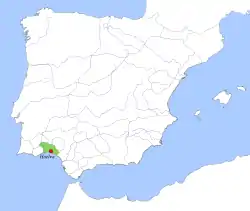 Taifa Kingdom of Saltés and Huelva, c. 1037. | |||||||
| Capital | Saltés | ||||||
| Common languages | Arabic, Mozarabic, Hebrew | ||||||
| Religion | Islam, Christianity (Roman Catholicism), Judaism | ||||||
| Government | Monarchy | ||||||
| Historical era | Middle Ages | ||||||
• Established | 1012 | ||||||
• Conquered by Seville | 1051 | ||||||
| Currency | Dirham and Dinar | ||||||
| |||||||
 |
Wikimedia Commons has media related to Taifa of Saltés and Huelva. |
The geographer al-Bakri (d. 1094) was born in the taifa of Saltés and Huelva.
List of Emirs
Bakrid dynasty
- 'Abd al-'Aziz 'Izz ad-Dawla: 1012/3–1051/2 or 53
References
This article is issued from Wikipedia. The text is licensed under Creative Commons - Attribution - Sharealike. Additional terms may apply for the media files.