Magnoliidae sensu Chase & Reveal
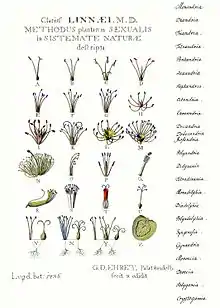
Magnoliidae is a subclass of Equisetopsida in the sense used by Mark W. Chase and James L. Reveal in their 2009 article "A phylogenetic classification of the land plants to accompany APG III."[1] This subclass comprises the angiosperms or flowering plants.
| Magnoliidae | |
|---|---|
 | |
| Scientific classification | |
| Kingdom: | |
| Class: | |
| Subclass: | Magnoliidae Novák ex Takht. (1967) |
| Superorders | |
|
18 Superorders. | |
| Synonyms | |
Phylogeny
The following diagram shows a likely phylogenic relationship between subclass Magnoliidae and the other Equisetopsida subclasses.
|
Superorders
Reveal and Chase, 2011,[2] divide the Magnoliidae subclass into the following superorders:
- Amborellanae M.W.Chase & Reveal (2009)
- Nymphaeanae Thorne ex Reveal (1992)
- Austrobaileyanae M.W.Chase & Reveal (2009)
- Magnolianae Takht. (1967)
- Lilianae Takht. (1967)
- Ceratophyllanae Takht. ex Reveal & Doweld (1999)
- Ranunculanae Takht. ex Reveal (1992)
- Proteanae Takht. (1967)
- Trochodendranae Takht. ex Reveal (1996)
- Buxanae Takht. ex Reveal & Doweld (1999)
- Myrothamnanae Takht. (1997)
- Dillenianae Takht. ex Doweld (2001)
- Saxifraganae Reveal (1994)
- Rosanae Takht. (1967)
- Berberidopsidanae Thorne & Reveal (2007)
- Santalanae Thorne ex Reveal (1992)
- Caryophyllanae Takht. (1967)
- Asteranae Takht. (1967)
The following diagram shows a likely phylogenic relationship between the Magnoliidae superorders.[3]
| Magnoliidae |
| |||||||||||||||||||||||||||||||||||||||||||||||||||||||||||||||||||||||||||||||||||||||||||||||||||||||||||||||||||||||||||||||||||||||||||||||||||||||||||||||||||||||||||||||||||||||||||||||||||||||||||||||||||||||||||||||||||||||||||||||||||||||||||||||||||||||||||||||||||||||||||||||||||||||||||||||||||||||||||||||||||||||||||||||||||||||||||||||||||||||||||||||||||||||||||||||||||||||||
Orders
The Magnoliidae subclass contains the following orders, listed by superorder:
| Original 2009 paper[2] | 2012 paper & 2013 updates[4] |
|---|---|
|
|
|
|
|
|
|
|
|
|
|
|
|
|
|
|
|
|
|
|
|
|
|
|
|
|
|
|
|
|
|
|
|
|
References
- Mark W. Chase & James L. Reveal (2009). "A phylogenetic classification of the land plants to accompany APG III". Botanical Journal of the Linnean Society. 161 (2): 122–127. doi:10.1111/j.1095-8339.2009.01002.x.
- James L. Reveal & Mark W. Chase (2011). "APG III: Bibliographical Information and Synonymy of Magnoliidae" (PDF). Phytotaxa. 19: 71–134.
- Birgitta Bremer, Kåre Bremer, Mark W. Chase, Michael F. Fay, James L. Reveal, Douglas E. Soltis, Pamela S. Soltis and Peter F. Stevens (2009). "An update of the Angiosperm Phylogeny Group classification for the orders and families of flowering plants: APG III". Botanical Journal of the Linnean Society. 161 (2): 105–121. doi:10.1111/j.1095-8339.2009.00996.x.CS1 maint: multiple names: authors list (link)
- James L. Reveal (2012). "An outline of a classification scheme for extant flowering plants". Phytoneuron. 37: 1–221.
This article is issued from Wikipedia. The text is licensed under Creative Commons - Attribution - Sharealike. Additional terms may apply for the media files.