Faboideae
The Faboideae are a subfamily of the flowering plant family Fabaceae or Leguminosae. An acceptable alternative name for the subfamily is Papilionoideae, or Papilionaceae when this group of plants is treated as a family.[4]
| Faboideae | |
|---|---|
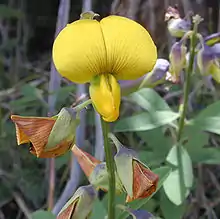 | |
| Crotalaria retusa | |
Scientific classification  | |
| Kingdom: | Plantae |
| Clade: | Tracheophytes |
| Clade: | Angiosperms |
| Clade: | Eudicots |
| Clade: | Rosids |
| Order: | Fabales |
| Family: | Fabaceae |
| Subfamily: | Faboideae |
| Tribes[1][2][3] | |
| |
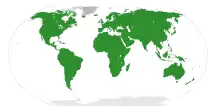 | |
| Distribution of the Faboideae | |
| Synonyms | |
| |
This subfamily is widely distributed, and members are adapted to a wide variety of environments. Faboideae may be trees, shrubs, or herbaceous plants. Members include the pea, the sweet pea, the laburnum, and other legumes. The pea-shaped flowers are characteristic of the Faboideae subfamily and root nodulation is very common.
Genera
The type genus, Faba, is a synonym of Vicia, and is listed here as Vicia.
- Abrus
- Acmispon
- Acosmium
- Adenocarpus
- Adenodolichos
- Adesmia
- Aenictophyton
- Aeschynomene
- Afgekia
- Aganope
- Airyantha
- Aldina
- Alexa
- Alhagi
- Alistilus
- Almaleea
- Alysicarpus
- Amburana
- Amicia
- Ammodendron
- Ammopiptanthus
- Ammothamnus
- Amphiodon[5]
- Amorpha
- Amphicarpaea
- Amphimas
- Amphithalea
- Anagyris
- Anarthrophyllum
- Ancistrotropis[6]
- Andira
- Angylocalyx
- Antheroporum
- Anthyllis
- Antopetitia
- Aotus
- Aphyllodium
- Apios
- Apoplanesia
- Apurimacia
- Arachis
- Argyrocytisus
- Argyrolobium
- Arthroclianthus
- Aspalathus
- Astragalus
- Ateleia
- Austrodolichos
- Austrosteenisia
- Baphia
- Baphiastrum
- Baphiopsis
- Baptisia
- Barbieria
- Behaimia
- Bionia
- Bituminaria
- Bobgunnia
- Bocoa
- Bolusafra
- Bolusanthus
- Bolusia
- Bossiaea
- Bowdichia
- Bowringia
- Brongniartia
- Brya
- Bryaspis
- Burkilliodendron
- Butea
- Cadia
- Cajanus
- Calia
- Calicotome
- Callerya
- Callistachys
- Calobota[7]
- Calophaca
- Calopogonium
- Calpurnia
- Camoensia
- Camptosema
- Campylotropis
- Canavalia
- Candolleodendron
- Caragana
- Carmichaelia
- Carrissoa
- Cascaronia
- Castanospermum
- Centrolobium
- Centrosema
- Chadsia
- Chaetocalyx
- Chamaecytisus
- Chapmannia
- Chesneya
- Chorizema
- Christia
- Cicer
- Cladrastis
- Clathrotropis
- Cleobulia
- Clianthus
- Clitoria
- Clitoriopsis
- Cochlianthus
- Cochliasanthus[6]
- Codariocalyx
- Collaea
- Cologania
- Colutea
- Condylostylis[6]
- Cordyla
- Coronilla
- Coursetia
- Craibia
- Cranocarpus
- Craspedolobium
- Cratylia
- Cristonia
- Crotalaria
- Cruddasia
- Cullen
- Cyamopsis
- Cyathostegia
- Cyclocarpa
- Cyclolobium
- Cyclopia
- Cymbosema
- Cytisophyllum
- Cytisopsis
- Cytisus
- Dahlstedtia
- Dalbergia
- Dalbergiella
- Dalea
- Dalhousiea
- Daviesia
- Decorsea
- Dendrolobium
- Derris
- Dermatophyllum
- Desmodiastrum
- Desmodium
- Dewevrea
- Dichilus
- Dicraeopetalum
- Dillwynia
- Dioclea
- Diphyllarium
- Diphysa
- Diplotropis
- Dipogon (plant)
- Dipteryx
- Discolobium
- Disynstemon
- Dolichopsis
- Dolichos
- Dorycnium
- Droogmansia
- Dumasia
- Dunbaria
- Dussia
- Dysolobium
- Ebenus
- Echinospartum
- Eleiotis
- Eminia
- Endosamara
- Eremosparton
- Erichsenia
- Erinacea
- Eriosema
- Errazurizia
- Erythrina
- Etaballia
- Euchilopsis
- Euchlora[8]
- Euchresta
- Eutaxia
- Eversmannia
- Exostyles
- Eysenhardtia
- Ezoloba[8]
- Fairchildia[9]
- Fiebrigiella
- Fissicalyx
- Flemingia
- Fordia
- Galactia
- Galega
- Gastrolobium
- Geissaspis
- Genista
- Genistidium
- Geoffroea
- Gliricidia
- Glycine
- Glycyrrhiza
- Gompholobium
- Gonocytisus
- Goodia
- Grazielodendron
- Guianodendron[10]
- Gueldenstaedtia
- Halimodendron
- Hammatolobium
- Haplormosia
- Hardenbergia
- Harleyodendron
- Harpalyce
- Hebestigma
- Hedysarum
- Helicotropis[6]
- Herpyza
- Hesperolaburnum
- Hippocrepis
- Hoita
- Holocalyx
- Hosackia
- Hovea
- Humularia
- Hymenocarpos
- Hymenolobium
- Hypocalyptus
- Indigastrum
- Indigofera
- Inocarpus
- Isotropis
- Jacksonia
- Kennedia
- Kotschya
- Kummerowia
- Lablab
- +Laburnocytisus[Note 1]
- Laburnum
- Lackeya
- Lamprolobium
- Lathyrus
- Latrobea
- Lebeckia
- Lecointea
- Lembotropis
- Lennea
- Lens
- Leobordea[8]
- Leptoderris
- Leptodesmia
- Leptolobium[10]
- Leptosema
- Leptospron[6]
- Lespedeza
- Lessertia
- Leucomphalos
- Limadendron
- Liparia
- Listia[8]
- Lonchocarpus
- Lotononis[8]
- Lotus
- Luetzelburgia
- Lupinus
- Luzonia
- Maackia
- Machaerium
- Macropsychanthus
- Macroptilium
- Macrotyloma
- Maraniona[11]
- Margaritolobium
- Marina
- Mastersia
- Mecopus
- Medicago
- Melilotus
- Melliniella
- Melolobium
- Microcharis
- Mildbraediodendron
- Millettia
- Mirbelia
- Monopteryx
- Mucuna
- Muellera
- Muelleranthus
- Mundulea
- Myrocarpus
- Myrospermum
- Myroxylon
- Mysanthus
- Neocollettia
- Neoharmsia
- Neonotonia
- Neorautanenia
- Neorudolphia
- Nephrodesmus
- Nesphostylis
- Nissolia
- Nogra
- Oberholzeria
- Olneya
- Onobrychis
- Ononis
- Ophrestia
- Orbexilum
- Oreophysa
- Ormocarpopsis
- Ormocarpum
- Ormosia
- Orphanodendron
- Ornithopus
- Oryxis
- Ostryocarpus
- Otholobium
- Otoptera
- Ottleya
- Oxylobium
- Oxyrhynchus
- Oxytropis
- Pachyrhizus
- Panurea
- Paracalyx
- Paragoodia
- Paramachaerium
- Parochetus
- Parryella
- Pearsonia
- Pediomelum
- Periandra
- Pericopsis
- Petaladenium
- Peteria
- Petteria
- Phaseolus
- Phylacium
- Phyllodium
- Phyllota
- Phylloxylon
- Physostigma
- Pickeringia
- Pictetia
- Piptanthus
- Piscidia
- Pisum
- Plagiocarpus
- Platycelyphium
- Platycyamus
- Platylobium
- Platymiscium
- Platypodium
- Platysepalum
- Podalyria
- Podocytisus
- Podolobium
- Poecilanthe
- Poiretia
- Poitea
- Polhillia
- Pongamiopsis
- Pseudarthria
- Pseudeminia
- Pseudoeriosema
- Pseudovigna
- Psophocarpus
- Psoralea
- Psoralidium
- Psorothamnus
- Pterocarpus
- Pterodon
- Ptycholobium
- Ptychosema
- Pueraria
- Pultenaea
- Pycnospora
- Pyranthus
- Rafnia
- Ramirezella[6]
- Ramorinoa
- Retama
- Rhodopis
- Rhynchosia
- Rhynchotropis
- Riedeliella
- Robinia
- Robynsiophyton
- Rothia
- Rupertia
- Sakoanala
- Salweenia
- Sarcodum
- Sartoria
- Schefflerodendron
- Scorpiurus
- Sellocharis
- Sesbania
- Shuteria
- Sigmoidotropis[6]
- Sinodolichos
- Smirnowia
- Smithia
- Soemmeringia
- Sophora
- Spartium
- Spartocytisus
- Spathionema
- Spatholobus
- Sphaerolobium
- Sphaerophysa
- Sphenostylis
- Sphinctospermum
- Spirotropis
- Spongiocarpella
- Stauracanthus
- Staminodianthus[12]
- Steinbachiella[13]
- Stirtonanthus
- Stonesiella
- Streblorrhiza
- Strongylodon
- Strophostyles
- Stylosanthes
- Styphnolobium
- Swainsona
- Swartzia
- Sweetia
- Sylvichadsia
- Syrmatium
- Tabaroa[14]
- Tadehagi
- Taralea
- Taverniera
- Templetonia
- Tephrosia
- Teramnus
- Teyleria
- Thermopsis
- Thinicola
- Tipuana
- Trifidacanthus
- Trifolium
- Trigonella
- Tripodion
- Trischidium[15]
- Uleanthus
- Ulex
- Uraria
- Uribea
- Urodon
- Vandasina
- Vatairea
- Vataireopsis
- Vatovaea
- Vavilovia
- Vermifrux
- Vicia
- Vigna
- Viminaria
- Virgilia
- Wajira[6]
- Weberbauerella
- Wiborgia
- Wiborgiella[7]
- Wisteria
- Xanthocercis
- Xiphotheca
- Zollernia
- Zornia
- Zygocarpum[16]
Systematics
Modern molecular phylogenetics recommend a clade-based classification of Faboideae as a superior alternative to the traditional tribal classification of Polhill:[5][17][18][19][20]
| Faboideae |
| ||||||||||||||||||||||||||||||||||||||||||||||||||||||||||||||||||||||||||||||||||||||||||||||||||||||||||||||||||||||||||||||||||||||||||||||||||||||||||||||||||||||||||||||||||||||||||||||||||||||||||||||||||||||||||||||||||||||||||||||||
| (Papilionoideae) |
Note: Minor branches have been omitted.
Notes
- Not a true genus. It is a graft-chimera between Laburnum and Cytisus.
References
- United States Department of Agriculture (USDA) (2003): Germplasm Resources Information Network – Faboideae Archived 2010-05-28 at the Wayback Machine. Version of 2003-JAN-17. Retrieved 2010-AUG-07.
- "Faboideae at UniProt". Retrieved 2010-08-07.
- "Systema Naturae 2000". Retrieved 2010-08-07.
- McNeill, J.; et al., eds. (2006), International code of botanical nomenclature (Vienna Code) adopted by the seventeenth International Botanical Congress, Vienna, Austria, July 2005 (electronic ed.), Vienna: International Association for Plant Taxonomy, archived from the original on 6 October 2012, retrieved 2011-02-20, Article 19.7
- Cardoso D, de Queiroz LP, Pennington RT, de Lima HC, Fonty É, Wojciechowski MF, Lavin M (2012). "Revisiting the phylogeny of papilionoid legumes: new insights from comprehensively sampled early-branching lineages". Am J Bot. 99 (12): 1991–2013. doi:10.3732/ajb.1200380. PMID 23221500.
- Delgado-Salinas A, Thulin M, Pasquet R, Weeden N, Lavin M (2011). "Vigna (Leguminosae) sensu lato: the names and identities of the American segregate genera". Am J Bot. 98 (10): 1694–715. doi:10.3732/ajb.1100069. PMID 21980163.
- Boatwright JS, Tilney PM, Van Wyk BE (2009). "The generic concept of Lebeckia (Crotalarieae, Fabaceae): reinstatement of the genus Calobota and the new genus Wiborgiella". S Afr J Bot. 75 (3): 546–556. doi:10.1016/j.sajb.2009.06.001.
- Boatwright JS, Wink M, van Wyk BE (2011). "The generic concept of Lotononis (Crotalarieae, Fabaceae): Reinstatement of the genera Euchlora, Leobordea and Listia and the new genus Ezoloba". Taxon. 60 (1): 161–77. doi:10.1002/tax.601014.
- Torke BM, Schaal BA (2008). "Molecular phylogenetics of the species-rich neotropical genus Swartzia (Leguminosae, Papilionoideae) and related genera of the swartzioid clade". Am J Bot. 95 (2): 215–228. doi:10.3732/ajb.95.2.215. PMID 21632346.
- Cardoso D, de Lima HC, Rodrigues RS, de Queiroz LP, Pennington RT, Lavin M (2012). "The Bowdichia clade of Genistoid legumes: Phylogenetic analysis of combined molecular and morphological data and a recircumscription of Diplotropis". Taxon. 61 (5): 1074–1087. doi:10.1002/tax.615012.
- Hughes CE, Lewis GP, Daza Yomona A, Reynel C (2004). "Maraniona. A New Dalbergioid Legume Genus (Leguminosae, Papilionoideae) from Peru". Syst Bot. 29 (2): 366–374. doi:10.1600/036364404774195557. S2CID 85957592.
- Cardoso D, de Lima HC, de Queiroz LP (2013). "Staminodianthus, a new neotropical Genistoid legume genus segregated from Diplotropis". Phytotaxa. 110 (1): 1–16. doi:10.11646/phytotaxa.110.1.1.
- Lewis GP, Wood JR, Lavin M (2012). "Steinbachiella (Leguminosae: Papilionoideae: Dalbergieae), endemic to Bolivia, is reinstated as an accepted genus". Kew Bull. 67 (4): 789–796. doi:10.1007/s12225-012-9415-z. S2CID 10964925.
- de Queiroz LP, Lewis GP, Wojciechowski MF (2010). "Tabaroa, a new genus of Leguminosae tribe Brongniartieae from Brazil". Kew Bull. 65 (2): 189–203. doi:10.1007/s12225-010-9202-7. JSTOR 23216080. S2CID 36238640.
- Ireland HE (2007). "Taxonomic changes in the South American genus Bocoa (Leguminosae–Swartzieae): Reinstatement of the name Trischidium, and a synopsis of both genera". Kew Bull. 62 (2): 333–350. JSTOR 20443359.
- Thulin M, Lavin M (2001). "Phylogeny and Biogeography of the Ormocarpum Group (Fabaceae): A New Genus Zygocarpum from the Horn of Africa Region". Syst Bot. 26 (2): 299–317. JSTOR 2666709.
- Cardoso D, Pennington RT, de Queiroz LP, Boatwright JS, Van Wykd BE, Wojciechowskie MF, Lavin M (2013). "Reconstructing the deep-branching relationships of the papilionoid legumes". S Afr J Bot. 89: 58–75. doi:10.1016/j.sajb.2013.05.001.
- Wojciechowskie MF (2013). "Towards a new classification of Leguminosae: Naming clades using non-Linnaean phylogenetic nomenclature". S. Afr. J. Bot. 89: 85–93. doi:10.1016/j.sajb.2013.06.017.
- LPWG [Legume Phylogeny Working Group] (2013). "Legume phylogeny and classification in the 21st century: progress, prospects and lessons for other species-rich clades" (PDF). Taxon. 62 (2): 217–248. doi:10.12705/622.8. hdl:10566/3455.
- de Queiroz LP, Pastore JF, Cardoso D, Snak C, de C Lima AL, Gagnon E, Vatanparast M, Holland AE, Egan AN (2015). "A multilocus phylogenetic analysis reveals the monophyly of a recircumscribed papilionoid legume tribe Diocleae with well-supported generic relationships". Mol Phylogenet Evol. 90: 1–19. doi:10.1016/j.ympev.2015.04.016. PMID 25934529.
External links
- Faboideae in L. Watson and M.J. Dallwitz (1992 onwards). The Families of Flowering Plants: Descriptions, Illustrations, Identification, Information Retrieval.
 |
Wikispecies has information related to Faboideae. |
 |
Wikimedia Commons has media related to Faboideae. |