Dingbat
In typography, a dingbat (sometimes more formally known as a printer's ornament or printer's character) is an ornament, a glyph (roughly, character) or spacer used in typesetting, often employed to create box frames (similar to box-drawing characters) or as a dinkus (section divider).
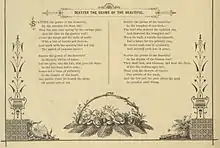
In the computer industry, a Dingbat font is a font that has symbols and shapes in the positions designated for alphabetical or numeric characters [many other fonts include dingbat glyphs, but in dedicated slots].
Examples
Examples of characters included in Unicode (ITC Zapf Dingbats series 100 and others):
| ✁ | ✂ | ✃ | ✄ | ✅ | ✆ | ✇ | ✈ | ✉ | ☛ | ☞ | ✌ | ✍ | ✎ | ✏ | |
| ✐ | ✑ | ✒ | ✓ | ✔ | ✕ | ✖ | ✗ | ✘ | ✙ | ✚ | ✛ | ✜ | ✝ | ✞ | ✟ |
| ✠ | ✡ | ✢ | ✣ | ✤ | ✥ | ✦ | ✧ | ★ | ✩ | ✪ | ✫ | ✬ | ✭ | ✮ | ✯ |
| ✰ | ✱ | ✲ | ✳ | ✴ | ✵ | ✶ | ✷ | ✸ | ✹ | ✺ | ✻ | ✼ | ✽ | ✾ | ✿ |
| ❀ | ❁ | ❂ | ❃ | ❄ | ❅ | ❆ | ❇ | ❈ | ❉ | ❊ | ❋ | ● | ❍ | ■ | ❏ |
| ☺ | ☻ | ♥ | ♦ | ♣ | ♠ | • | ◘ | ○ | ❐ | ❑ | ❒ | ▲ | ▼ | ◆ | ❖ |
| ◗ | ❘ | ❙ | ❚ | ❛ | ❜ | ❝ | ❞ |
Encoding
The advent of Unicode provides allowed commonly used dingbats to be given their own code points (unique binary code). Although Unicode fonts (Unicode compliant font) may contain glyphs for dingbats in addition to alphabetic characters, non-compliant fonts that have dingbats in place of alphabetic characters continue to be popular, primarily for ease of input. Such fonts are also sometimes known as pi fonts.[1]
Some of the dingbat symbols have been used as signature marks, used in bookbinding to order sections.
Dingbats Unicode block
| Dingbats | |
|---|---|
| Range | U+2700..U+27BF (192 code points) |
| Plane | BMP |
| Scripts | Common |
| Assigned | 192 code points |
| Unused | 0 reserved code points |
| Source standards | ITC Zapf Dingbats series 100 |
| Unicode version history | |
| 1.0.0 | 160 (+160) |
| 3.2 | 174 (+14) |
| 5.2 | 175 (+1) |
| 6.0 | 191 (+16) |
| 7.0 | 192 (+1) |
| Note: [2][3] | |
The Dingbats block (U+2700–U+27BF) was added to the Unicode Standard in June 1993, with the release of version 1.1. This code block contains decorative character variants, and other marks of emphasis and non-textual symbolism. Most of its characters were taken from Zapf Dingbats. Its block name in Unicode 1.0 was Zapf Dingbats.[4]
Compact table
| Dingbats[1] Official Unicode Consortium code chart (PDF) | ||||||||||||||||
| 0 | 1 | 2 | 3 | 4 | 5 | 6 | 7 | 8 | 9 | A | B | C | D | E | F | |
| U+270x | ✀ | ✁ | ✂ | ✃ | ✄ | ✅ | ✆ | ✇ | ✈ | ✉ | ✊ | ✋ | ✌ | ✍ | ✎ | ✏ |
| U+271x | ✐ | ✑ | ✒ | ✓ | ✔ | ✕ | ✖ | ✗ | ✘ | ✙ | ✚ | ✛ | ✜ | ✝ | ✞ | ✟ |
| U+272x | ✠ | ✡ | ✢ | ✣ | ✤ | ✥ | ✦ | ✧ | ✨ | ✩ | ✪ | ✫ | ✬ | ✭ | ✮ | ✯ |
| U+273x | ✰ | ✱ | ✲ | ✳ | ✴ | ✵ | ✶ | ✷ | ✸ | ✹ | ✺ | ✻ | ✼ | ✽ | ✾ | ✿ |
| U+274x | ❀ | ❁ | ❂ | ❃ | ❄ | ❅ | ❆ | ❇ | ❈ | ❉ | ❊ | ❋ | ❌ | ❍ | ❎ | ❏ |
| U+275x | ❐ | ❑ | ❒ | ❓ | ❔ | ❕ | ❖ | ❗ | ❘ | ❙ | ❚ | ❛ | ❜ | ❝ | ❞ | ❟ |
| U+276x | ❠ | ❡ | ❢ | ❣ | ❤ | ❥ | ❦ | ❧ | ❨ | ❩ | ❪ | ❫ | ❬ | ❭ | ❮ | ❯ |
| U+277x | ❰ | ❱ | ❲ | ❳ | ❴ | ❵ | ❶ | ❷ | ❸ | ❹ | ❺ | ❻ | ❼ | ❽ | ❾ | ❿ |
| U+278x | ➀ | ➁ | ➂ | ➃ | ➄ | ➅ | ➆ | ➇ | ➈ | ➉ | ➊ | ➋ | ➌ | ➍ | ➎ | ➏ |
| U+279x | ➐ | ➑ | ➒ | ➓ | ➔ | ➕ | ➖ | ➗ | ➘ | ➙ | ➚ | ➛ | ➜ | ➝ | ➞ | ➟ |
| U+27Ax | ➠ | ➡ | ➢ | ➣ | ➤ | ➥ | ➦ | ➧ | ➨ | ➩ | ➪ | ➫ | ➬ | ➭ | ➮ | ➯ |
| U+27Bx | ➰ | ➱ | ➲ | ➳ | ➴ | ➵ | ➶ | ➷ | ➸ | ➹ | ➺ | ➻ | ➼ | ➽ | ➾ | ➿ |
Notes
| ||||||||||||||||
Emoji
The Dingbats block contains 33 emoji: U+2702, U+2705, U+2708–U+270D, U+270F, U+2712, U+2714, U+2716, U+271D, U+2721, U+2728, U+2733–U+2734, U+2744, U+2747, U+274C, U+274E, U+2753–U+2755, U+2757, U+2763–U+2764, U+2795–U+2797, U+27A1, U+27B0 and U+27BF.[5][6]
The block has 40 standardized variants defined to specify emoji-style (U+FE0F VS16) or text presentation (U+FE0E VS15) for the following twenty base characters: U+2702, U+2708–U+2709, U+270C–U+270D, U+270F, U+2712, U+2714, U+2716, U+271D, U+2721, U+2733–U+2734, U+2744, U+2747, U+2753, U+2757, U+2763–U+2764 and U+27A1. [7]
| U+ | 2702 | 2708 | 2709 | 270C | 270D | 270F | 2712 | 2714 | 2716 | 271D |
| default presentation | text | text | text | text | text[8] | text | text | text | text | text |
| base code point | ✂ | ✈ | ✉ | ✌ | ✍ | ✏ | ✒ | ✔ | ✖ | ✝ |
| base+VS15 (text) | ✂︎ | ✈︎ | ✉︎ | ✌︎ | ✍︎ | ✏︎ | ✒︎ | ✔︎ | ✖︎ | ✝︎ |
| base+VS16 (emoji) | ✂️ | ✈️ | ✉️ | ✌️ | ✍️ | ✏️ | ✒️ | ✔️ | ✖️ | ✝️ |
| U+ | 2721 | 2733 | 2734 | 2744 | 2747 | 2753 | 2757 | 2763 | 2764 | 27A1 |
| default presentation | text | text | text | text | text | emoji | emoji | text | text | text |
| base code point | ✡ | ✳ | ✴ | ❄ | ❇ | ❓ | ❗ | ❣ | ❤ | ➡ |
| base+VS15 (text) | ✡︎ | ✳︎ | ✴︎ | ❄︎ | ❇︎ | ❓︎ | ❗︎ | ❣︎ | ❤︎ | ➡︎ |
| base+VS16 (emoji) | ✡️ | ✳️ | ✴️ | ❄️ | ❇️ | ❓️ | ❗️ | ❣️ | ❤️ | ➡️ |
Emoji modifiers
The Dingbats block has four emoji that represent hands. They can be modified using U+1F3FB–U+1F3FF to provide for a range of human skin color using the Fitzpatrick scale:[6]
| U+ | 270A | 270B | 270C | 270D |
| emoji | ✊ | ✋ | ✌️ | ✍️ |
| FITZ-1-2 | ✊🏻 | ✋🏻 | ✌️🏻 | ✍️🏻 |
| FITZ-3 | ✊🏼 | ✋🏼 | ✌️🏼 | ✍️🏼 |
| FITZ-4 | ✊🏽 | ✋🏽 | ✌️🏽 | ✍️🏽 |
| FITZ-5 | ✊🏾 | ✋🏾 | ✌️🏾 | ✍️🏾 |
| FITZ-6 | ✊🏿 | ✋🏿 | ✌️🏿 | ✍️🏿 |
Additional human emoji can be found in other Unicode blocks: Emoticons, Miscellaneous Symbols, Miscellaneous Symbols and Pictographs, Supplemental Symbols and Pictographs and Transport and Map Symbols.
History
The following Unicode-related documents record the purpose and process of defining specific characters in the Dingbats block:
| Version | Final code points[lower-alpha 1] | Count | L2 ID | WG2 ID | Document |
|---|---|---|---|---|---|
| 1.0.0 | U+2701..2704, 2706..2709, 270C..2727, 2729..274B, 274D, 274F..2752, 2756, 2758..275E, 2761..2767, 2776..2794, 2798..27AF, 27B1..27BE | 160 | (to be determined) | ||
| L2/11-438[lower-alpha 2][lower-alpha 3] | N4182 | Edberg, Peter (22 December 2011), Emoji Variation Sequences (Revision of L2/11-429) | |||
| L2/15-050R[lower-alpha 4][lower-alpha 3] | Davis, Mark; et al. (29 January 2015), Additional variation selectors for emoji | ||||
| L2/15-301[lower-alpha 5][lower-alpha 3] | Pournader, Roozbeh (1 November 2015), A proposal for 278 standardized variation sequences for emoji | ||||
| 3.2 | U+2768..2775 | 14 | L2/00-420 | Patel, Sairus (21 November 2000), Proposal for additional 14 Dingbats | |
| L2/00-436 | Patel, Sairus (18 December 2000), Proposal to complete the Dingbats block in Unicode/ISO-IEC 10646 | ||||
| L2/01-087 | N2321 | Patel, Sairus (31 January 2001), Proposal to complete the Dingbats block in Unicode/ISO-IEC 10646 | |||
| L2/01-012R | Moore, Lisa (21 May 2001), "Dingbats", Minutes UTC #86 in Mountain View, Jan 2001 | ||||
| L2/01-344 | N2353 (pdf, doc) | Umamaheswaran, V. S. (9 September 2001), "7.8 Proposal to complete the Dingbats block in 10646", Minutes from SC2/WG2 meeting #40 -- Mountain View, April 2001 | |||
| 5.2 | U+2757 | 1 | N3353 (pdf, doc) | Umamaheswaran, V. S. (10 October 2007), "M51.32", Unconfirmed minutes of WG 2 meeting 51 Hanzhou, China; 2007-04-24/27 | |
| L2/07-259 | Suignard, Michel (2 August 2007), Japanese TV Symbols | ||||
| L2/07-391 | N3341 | Suignard, Michel (18 September 2007), Japanese TV Symbols | |||
| L2/08-077R2 | N3397 | Suignard, Michel (11 March 2008), Japanese TV symbols | |||
| L2/08-128 | Iancu, Laurențiu (22 March 2008), Names and allocation of some Japanese TV symbols from N3397 | ||||
| L2/08-158 | Pentzlin, Karl (16 April 2008), Comments on L2/08-077R2 "Japanese TV Symbols" | ||||
| L2/08-188 | N3468 | Sekiguchi, Masahiro (22 April 2008), Collected comments on Japanese TV Symbols (WG2 N3397) | |||
| L2/08-077R3 | N3469 | Suignard, Michel (23 April 2008), Japanese TV symbols | |||
| L2/08-215 | Pentzlin, Karl (7 May 2008), Comments on L2/08-077R2 "Japanese TV Symbols" | ||||
| L2/08-289 | Pentzlin, Karl (5 August 2008), Proposal to rename and reassign some Japanese TV Symbols from L2/08-077R3 | ||||
| L2/08-292 | Stötzner, Andreas (6 August 2008), Improvement suggestions for n3469 | ||||
| L2/08-307 | Scherer, Markus (8 August 2008), Feedback on the Japanese TV Symbols Proposal (L2/08-077R3) | ||||
| L2/08-318 | N3453 (pdf, doc) | Umamaheswaran, V. S. (13 August 2008), "M52.14", Unconfirmed minutes of WG 2 meeting 52 | |||
| L2/08-161R2 | Moore, Lisa (5 November 2008), "Consensus 115-C17", UTC #115 Minutes, Approve 186 Japanese TV symbols for encoding in a future version of the standard. | ||||
| L2/09-064 | Scherer, Markus (29 January 2009), Request to change some ARIB/AMD6 character names and a code point | ||||
| L2/09-234 | N3603 (pdf, doc) | Umamaheswaran, V. S. (8 July 2009), "M54.03b", Unconfirmed minutes of WG 2 meeting 54 | |||
| L2/11-438[lower-alpha 2][lower-alpha 3] | N4182 | Edberg, Peter (22 December 2011), Emoji Variation Sequences (Revision of L2/11-429) | |||
| 6.0 | U+2705, 270A..270B, 2728, 274C, 274E, 2753..2755, 2795..2797, 27B0, 27BF[lower-alpha 3] | 14 | L2/09-025R2 | N3582[lower-alpha 6] | Scherer, Markus; Davis, Mark; Momoi, Kat; Tong, Darick; Kida, Yasuo; Edberg, Peter (5 April 2009), Proposal for Encoding Emoji Symbols |
| L2/09-026R | N3583 | Scherer, Markus; Davis, Mark; Momoi, Kat; Tong, Darick; Kida, Yasuo; Edberg, Peter (6 February 2009), Emoji Symbols Proposed for New Encoding | |||
| L2/09-027R2 | N3681 | Scherer, Markus (17 September 2009), Emoji Symbols: Background Data | |||
| L2/09-114 | N3607 | Towards an encoding of symbol characters used as emoji, 6 April 2009 | |||
| L2/09-412 | N3722 | Suignard, Michel (26 October 2009), "Ireland T2", Disposition of comments on SC2 N 4078 (PDAM text for Amendment 8 to ISO/IEC 10646:2003) | |||
| N3703 (pdf, doc) | Umamaheswaran, V. S. (13 April 2010), "M55.9h", Unconfirmed minutes of WG 2 meeting no. 55, Tokyo 2009-10-26/30 | ||||
| L2/09-335R | Moore, Lisa (10 November 2009), "Consensus 121-C10", UTC #121 / L2 #218 Minutes | ||||
| L2/10-088 | N3776 | DoCoMo Input on Emoji, 8 March 2010 | |||
| L2/10-089 | N3777 | KDDI Input on Emoji, 8 March 2010 | |||
| L2/10-137 | N3828 | Suignard, Michel (22 April 2010), "JP.G11b, JP.T5, JP.T12", Disposition of comments on SC2 N 4123 (FPDAM text for Amendment 8 to ISO/IEC 10646:2003) | |||
| L2/10-132 | Scherer, Markus; Davis, Mark; Momoi, Kat; Tong, Darick; Kida, Yasuo; Edberg, Peter (27 April 2010), Emoji Symbols: Background Data | ||||
| L2/10-138 | N3829 | Constable, Peter; et al. (27 April 2010), "10", Emoji Ad-Hoc Meeting Report | |||
| L2/16-361 | Pournader, Roozbeh; Felt, Doug (7 November 2016), Add text and emoji standardized variation sequences for 96 symbols | ||||
| U+275F..2760 | 2 | L2/09-021 | N3565 | Proposal to encode two heavy low quotes for German in the UCS Dingbats block, 15 January 2009 | |
| L2/09-003R | Moore, Lisa (12 February 2009), "D.7", UTC #118 / L2 #215 Minutes | ||||
| L2/09-234 | N3603 (pdf, doc) | Umamaheswaran, V. S. (8 July 2009), "M54.13b", Unconfirmed minutes of WG 2 meeting 54 | |||
| 7.0 | U+2700 | 1 | L2/11-052R | Suignard, Michel (15 February 2011), Wingdings and Webdings symbols - Preliminary study | |
| L2/11-149 | Suignard, Michel (9 May 2011), Proposal to add Wingdings and Webdings symbols | ||||
| L2/11-196 | N4022 | Suignard, Michel (21 May 2011), Revised Wingdings proposal | |||
| L2/11-247 | N4115 | Suignard, Michel (8 June 2011), Proposal to add Wingdings and Webdings Symbols | |||
| L2/11-344 | N4143 | Suignard, Michel (28 September 2011), Updated proposal to add Wingdings and Webdings Symbols | |||
| N4103 | "10.2.1 Wingdings/Webdings additions", Unconfirmed minutes of WG 2 meeting 58, 3 January 2012 | ||||
| L2/12-130 | N4239 | Suignard, Michel (8 May 2012), "E4.", Disposition of comments on SC2 N 4201 (PDAM text for Amendment 1.2 to ISO/IEC 10646 3rd edition) | |||
| N4363 | Suignard, Michel (13 October 2012), Status of encoding of Wingdings and Webdings Symbols | ||||
| L2/12-368 | N4384 | Suignard, Michel (6 November 2012), Status of encoding of Wingdings and Webdings Symbols | |||
| L2/12-086 | N4223 | Requests regarding the Wingdings/Webdings characters in ISO/IEC 10646 PDAM 1.2, 27 December 2012 | |||
| |||||
Ornamental Dingbats Unicode block
| Ornamental Dingbats | |
|---|---|
| Range | U+1F650..U+1F67F (48 code points) |
| Plane | SMP |
| Scripts | Common |
| Symbol sets | Leaf ornaments, ornamental punctuation |
| Assigned | 48 code points |
| Unused | 0 reserved code points |
| Source standards | dingbat fonts Webdings, Wingdings, and Wingdings 2 |
| Unicode version history | |
| 7.0 | 48 (+48) |
| Note: [2][3] | |
The Ornamental Dingbats block (U+1F650–U+1F67F) was added to the Unicode Standard in June 2014 with the release of version 7.0. This code block contains ornamental leaves, punctuation, and ampersands, quilt squares, and checkerboard patterns. It is a subset of dingbat fonts Webdings, Wingdings, and Wingdings 2.[9]
| Ornamental Dingbats[1] Official Unicode Consortium code chart (PDF) | ||||||||||||||||
| 0 | 1 | 2 | 3 | 4 | 5 | 6 | 7 | 8 | 9 | A | B | C | D | E | F | |
| U+1F65x | 🙐 | 🙑 | 🙒 | 🙓 | 🙔 | 🙕 | 🙖 | 🙗 | 🙘 | 🙙 | 🙚 | 🙛 | 🙜 | 🙝 | 🙞 | 🙟 |
| U+1F66x | 🙠 | 🙡 | 🙢 | 🙣 | 🙤 | 🙥 | 🙦 | 🙧 | 🙨 | 🙩 | 🙪 | 🙫 | 🙬 | 🙭 | 🙮 | 🙯 |
| U+1F67x | 🙰 | 🙱 | 🙲 | 🙳 | 🙴 | 🙵 | 🙶 | 🙷 | 🙸 | 🙹 | 🙺 | 🙻 | 🙼 | 🙽 | 🙾 | 🙿 |
Notes
| ||||||||||||||||
Character table
| Code | Result | Description |
|---|---|---|
| U+2700 | ✀ | Black safety scissors |
| U+2701 | ✁ | Upper blade scissors |
| U+2702 | ✂ | Black scissors |
| U+2703 | ✃ | Lower blade scissors |
| U+2704 | ✄ | White scissors |
| U+2705 | ✅ | White heavy check mark |
| U+2706 | ✆ | Telephone location sign |
| U+2707 | ✇ | Tape drive |
| U+2708 | ✈ | Airplane |
| U+2709 | ✉ | Envelope |
| U+270A | ✊ | Raised fist |
| U+270B | ✋ | Raised hand |
| U+270C | ✌ | Victory hand |
| U+270D | ✍ | Writing hand |
| U+270E | ✎ | Lower right pencil |
| U+270F | ✏ | Pencil |
| U+2710 | ✐ | Upper right pencil |
| U+2711 | ✑ | White nib |
| U+2712 | ✒ | Black nib |
| U+2713 | ✓ | Check mark |
| U+2714 | ✔ | Heavy check mark |
| U+2715 | ✕ | Multiplication X |
| U+2716 | ✖ | Heavy multiplication X |
| U+2717 | ✗ | Ballot X |
| U+2718 | ✘ | Heavy ballot X |
| U+2719 | ✙ | Outlined Greek cross |
| U+271A | ✚ | Heavy Greek cross |
| U+271B | ✛ | Open center cross |
| U+271C | ✜ | Heavy open center cross |
| U+271D | ✝ | Latin cross |
| U+271E | ✞ | Shadowed white Latin cross |
| U+271F | ✟ | Outlined Latin cross |
| U+2720 | ✠ | Maltese cross |
| U+2721 | ✡ | Star of David |
| U+2722 | ✢ | Four teardrop-spoked asterisk |
| U+2723 | ✣ | Four balloon-spoked asterisk |
| U+2724 | ✤ | Heavy four balloon-spoked asterisk |
| U+2725 | ✥ | Four club-spoked asterisk |
| U+2726 | ✦ | Black four-pointed star |
| U+2727 | ✧ | White four-pointed star |
| U+2728 | ✨ | Sparkles |
| U+2729 | ✩ | Stress outlined white star |
| U+272A | ✪ | Circled white star |
| U+272B | ✫ | Open center black star |
| U+272C | ✬ | Black center white star |
| U+272D | ✭ | Outlined black star |
| U+272E | ✮ | Heavy outlined black star |
| U+272F | ✯ | Pinwheel star |
| U+2730 | ✰ | Shadowed white star |
| U+2731 | ✱ | Heavy asterisk |
| U+2732 | ✲ | Open center asterisk |
| U+2733 | ✳ | Eight spoked asterisk |
| U+2734 | ✴ | Eight pointed black star |
| U+2735 | ✵ | Eight pointed pinwheel star |
| U+2736 | ✶ | Six pointed black star |
| U+2737 | ✷ | Eight pointed rectilinear black star |
| U+2738 | ✸ | Heavy eight pointed rectilinear black star |
| U+2739 | ✹ | Twelve pointed black star |
| U+273A | ✺ | Sixteen pointed asterisk |
| U+273B | ✻ | Teardrop spoked asterisk |
| U+273C | ✼ | Open center teardrop spoked asterisk |
| U+273D | ✽ | Heavy teardrop spoked asterisk |
| U+273E | ✾ | Six petalled black and white florette |
| U+273F | ✿ | Black florette |
| U+2740 | ❀ | White florette |
| U+2741 | ❁ | Eight petalled outlined black florette |
| U+2742 | ❂ | Circled open center eight pointed star |
| U+2743 | ❃ | Heavy teardrop spoked pinwheel asterisk |
| U+2744 | ❄ | Snowflake |
| U+2745 | ❅ | Tight trifoliate snowflake |
| U+2746 | ❆ | Heavy chevron snowflake |
| U+2747 | ❇ | Sparkle |
| U+2748 | ❈ | Heavy sparkle |
| U+2749 | ❉ | Balloon spoked asterisk |
| U+274A | ❊ | Eight teardrop spoked propeller asterisk |
| U+274B | ❋ | Heavy eight teardrop spoked propeller asterisk |
| U+274C | ❌ | Cross mark |
| U+274D | ❍ | Shadowed white circle |
| U+274E | ❎ | Negative squared cross mark |
| U+274F | ❏ | Lower right drop-shadowed white square |
| U+2750 | ❐ | Upper right drop-shadowed white square |
| U+2751 | ❑ | Lower right shadowed white square |
| U+2752 | ❒ | Upper right shadowed white square |
| U+2753 | ❓ | Black question mark ornament |
| U+2754 | ❔ | White question mark ornament |
| U+2755 | ❕ | White exclamation mark ornament |
| U+2756 | ❖ | Black diamond minus white X |
| U+2757 | ❗ | Heavy exclamation mark symbol |
| U+2758 | ❘ | Light vertical bar |
| U+2759 | ❙ | Medium vertical bar |
| U+275A | ❚ | Heavy vertical bar |
| U+275B | ❛ | Heavy single turned comma quotation mark ornament |
| U+275C | ❜ | Heavy single comma quotation mark ornament |
| U+275D | ❝ | Heavy double turned comma quotation mark ornament |
| U+275E | ❞ | Heavy double comma quotation mark ornament |
| U+275F | ❜ | Heavy low single comma quotation mark ornament |
| U+2760 | ❞ | Heavy low double comma quotation mark ornament |
| U+2761 | ❡ | Curved stem paragraph sign ornament |
| U+2762 | ❢ | Heavy exclamation mark ornament |
| U+2763 | ❣ | Heavy heart exclamation mark ornament |
| U+2764 | ❤ | Heavy black heart |
| U+2765 | ❥ | Rotated heavy black heart bullet |
| U+2766 | ❦ | Floral heart |
| U+2767 | ❧ | Rotated floral heart bullet |
| U+2768 | ❨ | Medium left parenthesis ornament |
| U+2769 | ❩ | Medium right parenthesis ornament |
| U+276A | ❪ | Medium flattened left parenthesis ornament |
| U+276B | ❫ | Medium flattened right parenthesis ornament |
| U+276C | ❬ | Medium left-pointing angle bracket ornament |
| U+276D | ❭ | Medium right-pointing angle bracket ornament |
| U+276E | ❮ | Heavy left-pointing angle quotation mark ornament |
| U+276F | ❯ | Heavy right-pointing angle quotation mark ornament |
| U+2770 | ❰ | Heavy left-pointing angle bracket ornament |
| U+2771 | ❱ | Heavy right-pointing angle bracket ornament |
| U+2772 | ❲ | Light left tortoise shell bracket ornament |
| U+2773 | ❳ | Light right tortoise shell bracket ornament |
| U+2774 | ❴ | Medium left curly bracket ornament |
| U+2775 | ❵ | Medium left curly bracket ornament |
| U+2776 | ❶ | Dingbat negative circled digit one |
| U+2777 | ❷ | Dingbat negative circled digit two |
| U+2778 | ❸ | Dingbat negative circled digit three |
| U+2779 | ❹ | Dingbat negative circled digit four |
| U+277A | ❺ | Dingbat negative circled digit five |
| U+277B | ❻ | Dingbat negative circled digit six |
| U+277C | ❼ | Dingbat negative circled digit seven |
| U+277D | ❽ | Dingbat negative circled digit eight |
| U+277E | ❾ | Dingbat negative circled digit nine |
| U+277F | ❿ | Dingbat negative circled digit ten |
| U+2780 | ➀ | Dingbat circled sans-serif digit one |
| U+2781 | ➁ | Dingbat circled sans-serif digit two |
| U+2782 | ➂ | Dingbat circled sans-serif digit three |
| U+2783 | ➃ | Dingbat circled sans-serif digit four |
| U+2784 | ➄ | Dingbat circled sans-serif digit five |
| U+2785 | ➅ | Dingbat circled sans-serif digit six |
| U+2786 | ➆ | Dingbat circled sans-serif digit seven |
| U+2787 | ➇ | Dingbat circled sans-serif digit eight |
| U+2788 | ➈ | Dingbat circled sans-serif digit nine |
| U+2789 | ➉ | Dingbat circled sans-serif digit ten |
| U+278A | ➊ | Dingbat negative circled sans-serif digit one |
| U+278B | ➋ | Dingbat negative circled sans-serif digit two |
| U+278C | ➌ | Dingbat negative circled sans-serif digit three |
| U+278D | ➍ | Dingbat negative circled sans-serif digit four |
| U+278E | ➎ | Dingbat negative circled sans-serif digit five |
| U+278F | ➏ | Dingbat negative circled sans-serif digit six |
| U+2790 | ➐ | Dingbat negative circled sans-serif digit seven |
| U+2791 | ➑ | Dingbat negative circled sans-serif digit eight |
| U+2792 | ➒ | Dingbat negative circled sans-serif digit nine |
| U+2793 | ➓ | Dingbat negative circled sans-serif digit ten |
| U+2794 | ➔ | Heavy wide-headed rightward arrow |
| U+2795 | ➕ | Heavy plus sign |
| U+2796 | ➖ | Heavy minus sign |
| U+2797 | ➗ | Heavy division sign |
| U+2798 | ➘ | Heavy south east arrow |
| U+2799 | ➙ | Heavy rightward arrow |
| U+279A | ➚ | Heavy north east arrow |
| U+279B | ➛ | Drafting point rightward arrow |
| U+279C | ➜ | Heavy round-tipped rightward arrow |
| U+279D | ➝ | Triangle-headed rightward arrow |
| U+279E | ➞ | Heavy triangle-headed rightward arrow |
| U+279F | ➟ | Dashed triangle-headed rightward arrow |
| U+27A0 | ➠ | Heavy dashed triangle-headed rightward arrow |
| U+27A1 | ➡ | Black rightward arrow |
| U+27A2 | ➢ | Three-D top-lighted rightward arrowhead |
| U+27A3 | ➣ | Three-D bottom-lighted rightward arrowhead |
| U+27A4 | ➤ | Black rightward arrowhead |
| U+27A5 | ➥ | Heavy black curved downward and rightward arrow |
| U+27A6 | ➦ | Heavy black curved upward and rightward arrow |
| U+27A7 | ➧ | Squat black rightward arrow |
| U+27A8 | ➨ | Heavy concave-pointed black rightward arrow |
| U+27A9 | ➩ | Right-shaded white rightward arrow |
| U+27AA | ➪ | Left-shaded white rightward arrow |
| U+27AB | ➫ | Back-tilted shadowed white rightward arrow |
| U+27AC | ➬ | Front-tilted shadowed white rightward arrow |
| U+27AD | ➭ | Heavy lower right-shadowed white rightward arrow |
| U+27AE | ➮ | Heavy upper right-shadowed white rightward arrow |
| U+27AF | ➯ | Notched lower right-shadowed white rightward arrow |
| U+27B0 | ➰ | Curly loop |
| U+27B1 | ➱ | Notched upper right-shadowed white rightward arrow |
| U+27B2 | ➲ | Circled heavy white rightward arrow |
| U+27B3 | ➳ | White-feathered rightward arrow |
| U+27B4 | ➴ | Black-feathered south east arrow |
| U+27B5 | ➵ | Black-feathered rightward arrow |
| U+27B6 | ➶ | Black-feathered north east arrow |
| U+27B7 | ➷ | Heavy black-feathered south east arrow |
| U+27B8 | ➸ | Heavy black-feathered rightward arrow |
| U+27B9 | ➹ | Heavy black-feathered north east arrow |
| U+27BA | ➺ | Teardrop-barbed rightward arrow |
| U+27BB | ➻ | Heavy teardrop-shanked rightward arrow |
| U+27BC | ➼ | Wedge-tailed rightward arrow |
| U+27BD | ➽ | Heavy wedge-tailed rightward arrow |
| U+27BE | ➾ | Open-outlined rightward arrow |
| U+27BF | ➿ | Double curly loop |
See also
- Arrows in Unicode blocks
- Asterism (typography), a triangle of asterisks
- Fleuron (typography), known as a class of horticultural dingbats
- Punctuation
- Text semigraphics, a method for emulating raster graphics using text mode video hardware
- Unicode symbols
Dingbat fonts
- Webdings, a TrueType dingbat font designed at Microsoft and published in 1997
- Wingdings, a TrueType dingbat font assembled by Microsoft in 1990, using glyphs from Lucida Arrows, Lucida Icons, and Lucida Stars, three fonts they licensed from Charles Bigelow and Kris Holmes
- Zapf Dingbats, a dingbat font designed by Hermann Zapf in 1978, and licensed by International Typeface Corporation
References
- "Fonts by Adobe" (PDF). adobe.com. Archived from the original (PDF) on 21 April 2015.
- "Unicode character database". The Unicode Standard. Retrieved 9 July 2016.
- "Enumerated Versions of The Unicode Standard". The Unicode Standard. Retrieved 9 July 2016.
- "3.8: Block-by-Block Charts" (PDF). The Unicode Standard. version 1.0. Unicode Consortium.
- "UTR #51: Unicode Emoji". Unicode Consortium. 11 February 2020.
- "UCD: Emoji Data for UTR #51". Unicode Consortium. 28 January 2020.
- "UTS #51 Emoji Variation Sequences". The Unicode Consortium.
- Google Chrome on Android uses the emoji presentation by default, despite this standard.
- "N4115: Proposal to add Wingdings and Webdings Symbols" (PDF). Retrieved 2 July 2014.
External links
 |
Wikimedia Commons has media related to Typographic ornaments. |
- Retinart: A history of often-seen typographic marks
- Dingbat Depot: a large, well-known archive of free dingbat fonts.
| Page | |||||||||
|---|---|---|---|---|---|---|---|---|---|
| Paragraph | |||||||||
| Character |
| ||||||||
| Classifications |
| ||||||||
| Punctuation | |||||||||
| Typesetting | |||||||||
| Typographic units | |||||||||
| Digital typography | |||||||||
| Related articles | |||||||||
| Related tables |
| ||||||||
| |||||||||
